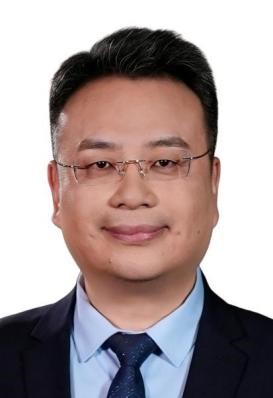
中国科学院地理科学与资源研究所研究员,中国科学院大学岗位教授,硕士生导师。1978年生于山东临沂,2006年获中国科学院研究生院博士学位,2006-2007年在美国密歇根大学自然资源与环境学院从事博士后访问研究,2014年入选中国科学院青年创新促进会会员。已发表学术论文100余篇,牵头完成的30余篇咨询报告被中央有关部门采用,出版译著、专著5部。兼任中国自然资源学会理事、青年工作委员会主任、《自然资源学报》编委。
研究领域
主要从事土地利用变化、自然资源评估相关研究工作,研究兴趣包括:
(1)土地利用变化遥感探测与空间模拟
针对土地利用变化领域的核心科学问题,以地理学、生态学、经济学等相关学科理论为依托,综合运用国内外不同时间、空间与光谱分辨率的卫星遥感数据,探测土地利用类型、质量与利用强度等关键信息,通过GIS空间分析、实地调查和模型模拟等方法,研究区域土地利用变化的时空规律,揭示其驱动机制与约束因子,探索土地利用变化的资源、环境与生态效应及其对人类福祉的影响。
(2)区域自然资源与生态系统综合评估
面向国家和地方生态文明建设需求,服务“一带一路”倡议,开展典型区域水资源、土地资源、生物资源、能源与矿产资源以及生态系统供给功能、调节功能、文化与支持功能综合评估,为国土空间开发与保护、资源环境承载力预警、碳达峰与新能源布局、碳中和与碳汇生态建设、重大资源环境与生态工程论证、自然资本与生态补偿、资源节约集约利用绩效考核等提供管理与决策支持。
主要研究成果
(1)探索了耕地复种遥感智能识别方法,推动了土地资源利用强度研究
以长江中游平原、华北平原为案例,基于农作物关键时间窗口植被指数的显著变化,通过栅格化的农作物多熟种植与复种指数评价,系统研究了耕地利用强度的时空变化,及其对经济激励、农业政策的快速响应机制。精准揭示了区域土地-水资源-粮食纽带关系,模拟了不同情景的耕地复种对区域水资源和粮食生产的影响。研究成果为识别优质耕地、划定永久基本农田、揭示耕地“非农化”“非粮化”规律、统筹流域水土资源管理、国土空间规划与治理提供了科技支撑。
(2)深化了林草生态建设的资源地理研究,支撑了国家生态建设成效评估
通过卫星遥感、野外生态定位监测数据的综合分析,揭示了我国大规模生态建设的显著成效及其空间差异。发现年降水量200-400毫米的区域,尤其是黄土高原地区植被改善最为明显,同时指出在天然降水明显增加、植被趋好、土壤侵蚀明显降低的情势下,黄河中上游干支流的水源涵养功能并未明显提升。建议黄河流域高质量生态建设应当由传统的造林绿化、保持水土,转变到因地制宜,提升生态系统多元服务功能上来。相关研究成果被自然资源部和国家林业草原局采用。
(3)揭示了双碳战略下光伏时空变化规律,模拟了光伏覆被未来发展情景
面向光伏等新能源快速扩张带来的土地利用新变化,基于Landsat-8、Sentinel-2影像与GEE平台,采用改进的面向对象随机森林算法,自主研发了2000-2025年长时间序列光伏时空变化数据集。系统揭示了中国光伏覆被的空间分布、时间变化、占地特征、外部风险与更新路径。在此基础上,通过CLUMondo模型模拟了未来碳达峰、碳中和情景下,全国光伏用地的时空演变趋势与扩张路径。研究成果为统筹实现双碳目标、优化新能源用地政策、推进新能源资源普查提供了科学依据。
代表性学术论文
[1] Luguang Jiang*, Ye Liu, Liwen Yang. Scenario-based simulation of future photovoltaic land expansion in China: Balancing energy demands and ecological conservation. Environmental Impact Assessment Review, 2025. https://doi.org/10.1016/j.eiar.2025.108203
[2] Luguang Jiang*, Ye Liu, Liwen Yang, Huixia Zhao. Spatio-temporal exposure of photovoltaic farms to typhoon disasters for sustainable development in China's Coastal Regions. Resources, Environment and Sustainability, 2025. https://doi.org/10.1016/j.resenv.2025.100272
[3] Luguang Jiang*, Ye Liu, Liwen Yang. Rapid expansion of photovoltaic land in China's coastal regions: A doubling from 2020 to 2023. Land Use Policy, 2025. https://doi.org/10.1016/j.landusepol.2025.107836
[4] Liwen Yang, Luguang Jiang*, Ye Liu. More than doubled in 2023: Mapping the photovoltaic power plants in China based on satellite data and machine learning. Renewable Energy, 2025. https://doi.org/10.1016/j.renene.2025.124381
[5] Liwen Yang, Luguang Jiang*, Ye Liu. Spatiotemporal dynamics and ecological impact of photovoltaic power plants in China (2000–2023): a remote sensing approach. Big Earth Data, 2025. https://doi.org/10.1080/20964471.2025.2583587
[6] Zelin Yu, Luguang Jiang*, Ye Liu. Integrating prey resource into the analysis of snow leopards corridor and conffict risk zone for sustainable conservation. Ecological Indicators, 2026, 185: 114761. https://doi.org/10.1016/j.ecolind.2026.114761
[7] Luguang Jiang*, Ye Liu. A new method for alpine timberline peaks extraction based on remote sensing and inverted digital elevation model. Geo-spatial Information Science, 2025, https://doi.org/10.1080/10095020.2025.2514816
[8] Luguang Jiang*, Ye Liu. Rediscovering the location of agricultural production: Spatial linkage of farmland use intensity and labor opportunity costs in Central China. Habitat International, 2024, 152: 103160. https://doi.org/10.1016/j.habitatint.2024.103160
[9] Luguang Jiang*, Ye Liu, Cheng Yang. Trade-off between the future water resource utilization and grain production in a water-deffcient region from the perspective of the Water-Land-Grain nexus. Journal of Hydrology, 2024, 131697. https://doi.org/10.1016/j.jhydrol.2024.131697
[10] Luguang Jiang*, Ye Liu. Spatiotemporal dynamics of COVID-19 pandemic city lockdown: Insights from nighttime light remote sensing. GeoHealth, 2024, 8, e2024GH001034. https://doi.org/10.1029/2024GH001034
[11] Luguang Jiang*, Ye Liu. Dynamic assessment of the COVID-19 lockdown in the Xinjiang region using night-time light remote sensing. International Journal of Digital Earth, 2024,17,1. https://doi.org/10.1080/17538947.2023.2300317
[12] Haixia Xu, Luguang Jiang*, Ye Liu. Mapping the potential distribution of Asian elephants: Implications for conservation and human–elephant conflict mitigation in South and Southeast Asia. Ecological Informatics, 2024, 80, 102518. https://doi.org/10.1016/j.ecoinf.2024.102518
[13] Ruoqi Liu, Jinwei Dong, Luguang Jiang, Yong Ge, Chang Fan, Tong Yang, Geli Zhang. Agricultural flood resistance enhanced after returning farmlands to lakes. PNAS, 2024, 121(39), e2410967121. https://doi.org/10.1073/pnas.2410967121
[14] Luguang Jiang*, Ye Liu, Si Wu. Spatiotemporal Variation and Stability of Rice Planting Using Landsat-MODIS Fusion Images from 1990 to 2020. Remote Sensing, 2023, 15(19), 4814. https://doi.org/10.3390/rs15194814
[15] Luguang Jiang*, Ye Liu, Haixia Xu. Variation in Vegetation Quality of Terrestrial Ecosystems in China: Coupling Analysis Based on Remote Sensing and Typical Stations Monitoring Data. Remote Sensing, 2023, 15(9), 2276. https://doi.org/10.3390/rs15092276
[16] Luguang Jiang*, Si Wu, Ye Liu. Change Analysis on the Spatio-Temporal Patterns of Main Crop Planting in the Middle Yangtze Plain. Remote Sensing, 2022, 14(5): 1141. https://doi.org/10.3390/rs14051141
[17] Luguang Jiang*, Ye Liu, Si Wu, Cheng Yang. Analyzing ecological environment change and associated driving factors in China based on NDVI time series data. Ecological Indicators, 2021, 129: 107933. https://doi.org/10.1016/j.ecolind. 2021.107933
[18] Niannian Fan, Zhongxin Chu, Luguang Jiang, Marwan A. Hassan, Michael P. Lamb, Xingnian Liu. Abrupt drainage basin reorganization following a Pleistocene river capture, Nature Communications, 2018, 9:3756. https://www.nature.com/articles/s41467-018-06238-6
[19] Rui Zhang, Qing Tian, Luguang Jiang, Andrew Crooks, Shuhua Qi, Ruixin Yang. Projecting cropping patterns around Poyang lake and prioritizing areas for policy intervention to promote rice: A cellular automata model. Land Use Policy, 2018, 74:248-260. https://doi.org/10.1016/j.landusepol.2017.09.040
[20] Peng Li, Luguang Jiang, Zhiming Feng. Cross-Comparison of Vegetation Indices Derived from Landsat-7 Enhanced Thematic Mapper Plus (ETM+) and Landsat-8 Operational Land Imager (OLI) Sensors. Remote Sensing, 2014, 6(1): 310-329. https://doi.org/10.3390/rs6010310
[21] 姜鲁光*,刘晔. 朝鲜粮食生产能力及增产潜力影响因素研究. 世界地理研究,2023, 32(5): 67-78
[22] 姜鲁光*,杨成,刘晔. 基于夜间灯光数据的1992-2020年老挝经济社会发展时空变化. 资源科学,2021, 43(12):2381-2392
[23] 姜鲁光*,杨成,封志明,刘晔. 面向多目标情景的大清河流域水资源利用权衡. 资源科学,2021, 43(8): 1649-1661
[24] 姜鲁光,吕佩忆,封志明,刘晔. 雄安新区土地利用空间特征及起步区方案比选研究. 资源科学,2017, 39(6): 991-998
[25] 赵庆庆,姜鲁光*,李文叶,封志明.鲁西北平原冬小麦种植格局时空变化:2000-2014. 国土资源遥感,2017, 29(2):173-180
[26] 姜鲁光,刘晓娜,封志明.三江并流区高山林线的遥感识别及其空间格局分析. 资源科学,2014, 36(2): 259-266
[27] 李文叶,姜鲁光*,李鹏.2001-2010年鄱阳湖圩区水稻多熟种植时空格局变化. 资源科学,2014, 36(4): 809-816
[28] 李鹏,封志明,姜鲁光*,刘影,胡久伟,朱建平.鄱阳湖天然湖面遥感监测及其与水位关系研究. 自然资源学报,2013, 28(9): 1-13
[29] 李鹏,姜鲁光*,封志明,于秀波. 生态系统服务竞争与协同研究进展. 生态学报,2012, 32(16): 5219-5229
[30] 姜鲁光,封志明,于秀波,甄霖,黄河清. 退田还湖后鄱阳湖区洪水调蓄功能的多情景模拟. 资源科学,2010, 32(5): 817-823
招生专业与方向
招生专业:自然资源学。研究方向:资源地理与国土资源。欢迎具有扎实的地理学、生态学及相关学科基础知识,熟悉遥感与GIS应用的广大同学报考。
联系方式
地址:北京市朝阳区大屯路甲11号,中科院地理资源所。邮编:100101
Email: jianglg@igsnrr.ac.cn




 在线留言
在线留言 联系我们
联系我们 所长信箱
所长信箱